Loading...
Serving Middletown, CT and surrounding areas. (860) 854-0848
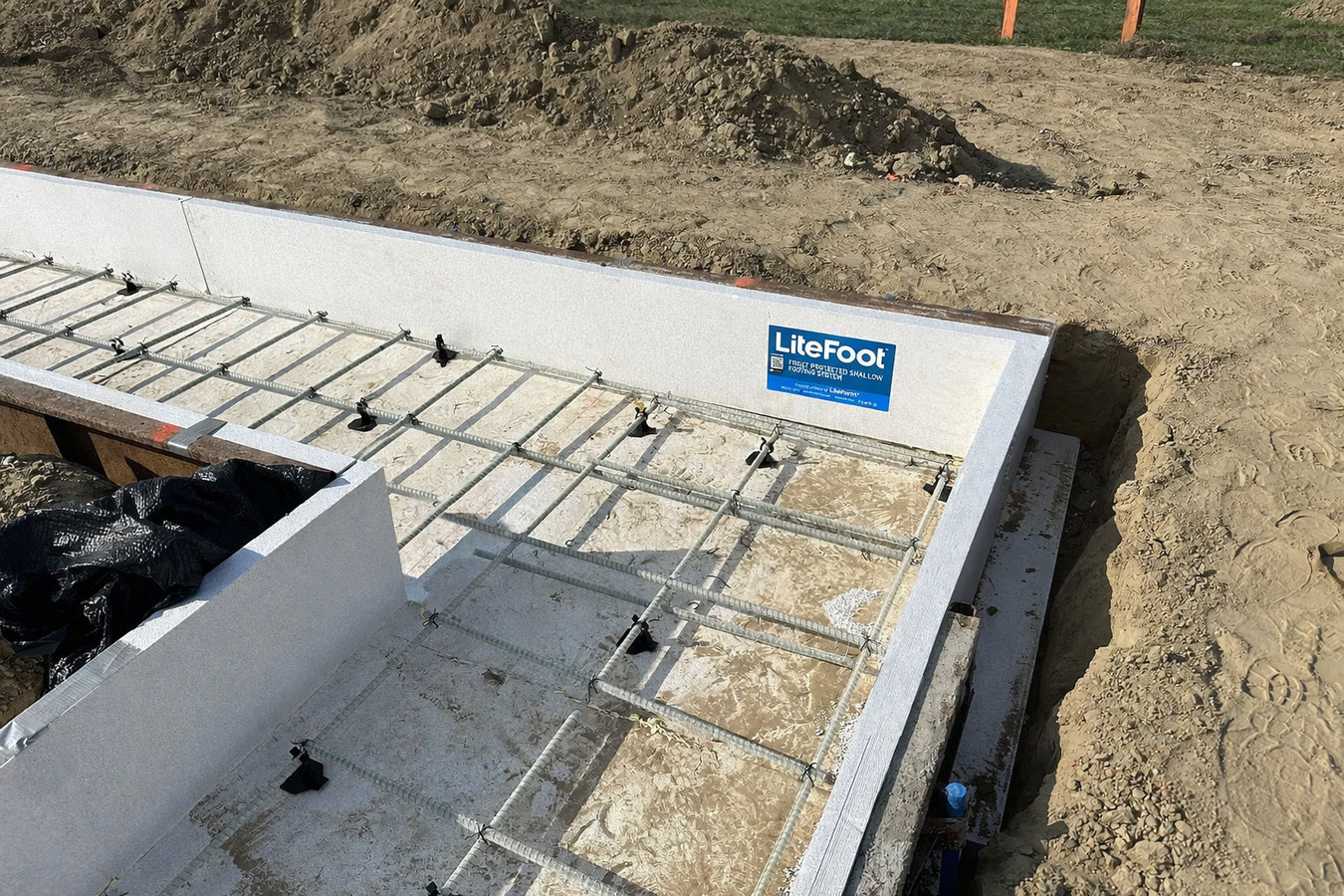
Every deck, addition, retaining wall, and structural column starts with a footing. We excavate below Connecticut's frost line, form, and pour footings that hold their position through Middletown winters - with full permit management from day one.
Concrete footings in Middletown, CT are the poured concrete bases that anchor structural elements - decks, additions, retaining walls, columns - to stable ground below the frost line, typically requiring excavation of at least 42 to 48 inches and a properly sized concrete pad or continuous strip poured within permitted, inspected forms.
If you are planning a deck, adding a room, or building a retaining wall, the footings are the first thing that goes in and the last thing you want to get wrong. A footing placed too shallow will heave with the frost every winter, and the movement it causes in the structure above it does not stop until the footing is replaced. Middletown's winters are hard enough on concrete that depth is not a suggestion - it is the difference between a structure that stays put and one that requires expensive repairs within a few years.
For projects where footings support new foundation walls for an addition or a structural upgrade, our foundation installation service handles the full scope of below-grade work from footings through finished walls.
If deck posts or porch columns have started to lean, crack at the base, or lift out of the ground, the footings underneath have likely failed or were never deep enough to begin with. In Middletown, shallow footings get pushed by frost every winter. Catching this early prevents a minor repair from becoming a full deck rebuild.
An addition that is cracking along the joint where it meets the main house, or an outbuilding whose doors and windows are starting to bind, is showing signs of footing failure or inadequate depth. Once settling starts, it tends to accelerate. The sooner a structural assessment happens, the more options you have for fixing the problem cleanly.
Any new structure that applies load to the ground - a deck, a room addition, a retaining wall, a carport column - needs properly sized and properly placed concrete footings before anything else goes up. Getting this step right determines whether the finished structure is stable for decades or starts moving within a few years.
A retaining wall that is leaning outward or cracking at the base is often telling you the footings are failing under the weight and pressure of the retained soil. In Middletown, the wet springs and clay-heavy soils near the Connecticut River valley put significant lateral pressure on retaining structures. A wall that leans gets worse quickly - it does not self-correct.
We install concrete footings for a range of residential and small commercial projects in Middletown. Every job starts with a site visit to understand the soil conditions, assess drainage, and confirm what the structure requires - because footing dimensions are not one-size-fits-all. Deck footings, addition footings, and retaining wall footings each have different load requirements, and parts of Middletown near the Connecticut River valley have soil conditions that require extra attention before we propose dimensions or depths. Projects that need a full foundation wall above the footing - not just post holes or pads - are handled through our foundation installation service, which covers the complete below-grade scope.
When a footing project is part of a larger property upgrade that also involves raising or leveling an existing structure, we can coordinate with our foundation raising team to manage both phases under one project. Every footing job we take on includes permit coordination, city inspection scheduling, and a written estimate before any digging starts.
Suited for new deck construction or replacement of failed footings under existing deck posts - sized and placed to meet local building code requirements.
Suited for home additions where continuous footings are required below the new foundation wall, excavated below Connecticut's frost line.
Suited for new or replacement retaining walls where a structural footing is needed to anchor the base against soil pressure and frost movement.
Suited for structural columns, carport posts, pergolas, and freestanding structures that need a solid concrete base to prevent frost heave.
Middletown sits in the Connecticut River valley, and the soil in parts of the city - especially lower-lying areas and neighborhoods close to the river - includes clay-heavy or fill material that holds water and does not drain as quickly as sandy or gravelly soil. Clay soil expands when it absorbs moisture and contracts when it dries out, which means footings in these areas face both frost movement from above and soil movement from below. Getting the depth right and sizing the footing base to distribute load across enough ground area is what keeps a structure from settling or shifting over time. This is not a reason to avoid building - it is a reason to work with a contractor who assesses your specific site before recommending dimensions.
We serve property owners throughout Middletown and the surrounding area, including Hartford and New Britain. The same site-specific assessment approach and permit-managed process applies across all of the communities we work in.
We visit your site to assess soil conditions, measure the layout, and understand what the project requires structurally. You will receive a written estimate with a clear scope and price before any work begins. We respond to all new inquiries within one business day.
For structural footing work, Middletown requires a building permit. We handle the paperwork with the city's Building Department on your behalf and schedule the job once the permit is issued. No digging starts without the permit in hand.
We excavate to the required depth - at least 42 to 48 inches below grade in Connecticut - and set up the forms that define the footing size and shape. This is when the city inspector reviews the excavation before the concrete is poured, confirming depth and dimensions meet code.
Concrete is poured into the forms, finished, and allowed to cure. We give you a clear timeline for how long to wait before structural loads are placed on the new footings. The inspector signs off on the completed work, and you receive a record of the permitted, inspected installation.
We visit your site, assess soil conditions, and give you a written estimate - no pressure. Reply within one business day.
Connecticut's frost line is roughly 42 to 48 inches below grade. We excavate to that depth on every structural footing, because a footing placed too shallow will heave in Middletown winters. There is no patch for a footing that was too shallow from day one - the repair is a full replacement.
Footing work in Middletown requires a city inspection before concrete is poured. We coordinate that inspection as part of the job so you do not have to manage it yourself. A passed inspection means your footing is on record as meeting code - which matters when you sell the property.
Parts of Middletown - especially areas near the Connecticut River valley - have clay-heavy or fill soils that do not compact as firmly as gravel or sandy ground. We assess your specific site conditions before we propose footing dimensions, not after. What works on one street may not work on another.
You receive a written, itemized estimate before we touch your property. If conditions on your site require a change - such as deeper excavation because the soil is softer than expected - we discuss it with you before we proceed, not after. The price you agree to is the price you pay.
The American Concrete Institute publishes the standards that govern footing design and concrete construction in residential and commercial settings. Our approach - excavating to below the frost line, sizing footings to the load, and following the permit and inspection process - reflects those standards in every job we take on in Middletown.
Connecticut building code footing requirements are set by the Connecticut State Building Code. Before any digging begins, underground utilities should be located by calling 811.
Lifting and leveling an existing structure to allow new or repaired footings to be installed beneath it - often the next step when footings have failed.
Learn MoreFull below-grade scope for new builds and additions - footings, formed walls, waterproofing, and drainage - when the project goes beyond individual pads or post holes.
Learn MoreSpring scheduling fills fast - reach out now to lock in your spot before the season starts.