Loading...
Serving Middletown, CT and surrounding areas. (860) 854-0848
Middletown Concrete Company works throughout New Britain, CT on slab foundations, concrete driveways, retaining walls, and patio construction - built to handle the freeze-thaw cycles and clay soils that stress concrete on pre-war lots. Licensed, insured, and responding within one business day.
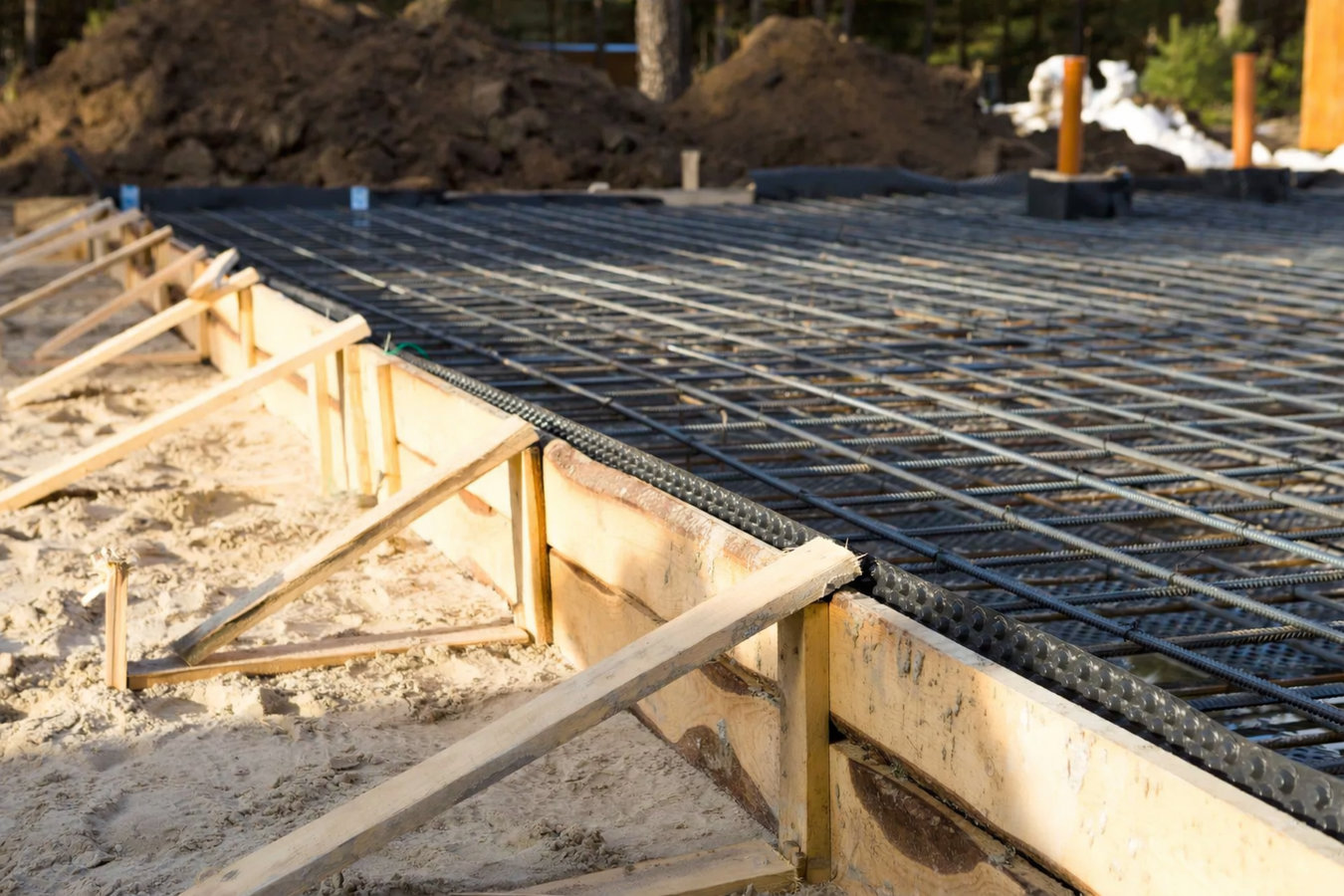
New Britain has a high concentration of older homes adding garages, in-law apartments, and outbuildings on small urban lots where slab foundations are the practical choice. Getting the frost depth and base preparation right matters here, where clay soil holds moisture through the winter. Our slab foundation building process accounts for the frost line and local soil conditions so the slab does not heave or crack within the first few winters.
A large share of New Britain homes were built before 1950, and many of them sit on original stone or brick foundations that were never meant to last this long. When those foundations start to bow, crack, or leak, the repair or replacement work has to account for what is already there. We handle both assessment and full new foundation installation for properties throughout the city.
New Britain driveways are often narrow - shared drives between two-family homes are common, and small in-town lots do not leave much room. Concrete is a better long-term choice than asphalt on dense urban lots because it holds its edge and does not soften in summer heat. We design and pour driveways sized for the actual lot conditions, not a standard template.
Hillside lots near Walnut Hill Park and the neighborhoods on the west side of the city often need retaining walls to manage grade changes between properties. Clay soil holds water behind a wall and creates hydrostatic pressure that can crack a wall that was not built with drainage. We include proper drainage aggregate and weep holes in every wall we build.
Older two-family and three-family homes throughout New Britain have original front steps and sidewalk sections that have heaved, cracked, and become safety hazards. We replace them to current code with broom-finished surfaces and proper pitch so rain and snowmelt drain away from the structure rather than pooling at the base.
Decks, porches, and additions added to New Britain homes need footings that extend below the frost line - typically 42 to 48 inches in this part of Connecticut. Footings that were poured too shallow shift every spring and eventually pull the structure they support out of plumb. We pour footings to the correct depth and diameter for your specific addition.
New Britain grew during the industrial boom of the late 1800s and early 1900s, and most of its housing reflects that era. Census data shows a large share of homes here were built before 1950, with a significant portion dating to before 1940. That means contractors are regularly working on foundations, slabs, and steps that have been through 75 to 100 Connecticut winters. The freeze-thaw cycles that hit central Connecticut from December through March crack concrete that was not built with the right base depth and joint placement - and houses this old often have neither. The clay-heavy, glacially deposited soil across much of the city holds moisture close to foundations and concrete slabs, amplifying the damage every year the problem goes unaddressed.
The building stock itself creates specific challenges. New Britain has a high concentration of two-family and three-family homes built to house factory workers, and many of those structures are on small, dense lots where equipment access is limited and neighbors are close. Work on a shared driveway or a front walkway in a dense block requires planning that a contractor used to suburban jobs might not think through. The outer neighborhoods - particularly on the west side of the city - have ranch and split-level homes from the 1960s and 1970s on slightly larger lots, and those properties have their own set of aging concrete issues from a different era of construction.
Our crew works throughout New Britain regularly, and we understand the local conditions that affect concrete work here. We pull permits through the City of New Britain Building Department for jobs that require them, and we are familiar with the city's inspection process. The high share of rental and multi-family properties across the city - roughly 60 percent of housing units are renter-occupied - means we often coordinate between property owners and tenants on job scheduling, which takes more planning than a straightforward single-family job.
New Britain earned its nickname "Hardware City" from decades of manufacturing that built the dense, working-class neighborhoods we see today. Walnut Hill Park - designed by Frederick Law Olmsted, the same landscape architect behind Central Park - sits at the heart of the city, and the residential blocks surrounding it on all sides are among the oldest and densest in town. Homes near downtown along West Main Street and in the streets off Corbin Avenue are the kind of properties where we encounter the most foundation and slab work, simply because of their age and the soil conditions underneath them.
We also serve communities neighboring New Britain. Homeowners in Southington to the south call us regularly, and we cover West Hartford to the north.
Contact us by phone or through the estimate form and describe what you need. We respond within one business day and will ask a few questions about your property and access before scheduling a site visit.
We visit your New Britain property to assess the actual site - lot access, existing conditions, drainage, and soil signs. The written estimate you receive covers the full scope of work with no items left vague, so you know exactly what the job includes before you decide.
For jobs that require a New Britain building permit, we handle the application and coordinate the inspection timeline. You do not need to manage the permit process yourself - we handle that as part of the job.
We complete the work on the agreed schedule and leave the site clean. Before we leave, we walk you through the finished work and give you plain-terms guidance on curing time and any care the new concrete needs in the first few weeks.
We serve New Britain and all surrounding areas. Free written estimates with no obligation, and we respond within one business day.
New Britain is a mid-sized city of about 73,000 people located roughly 9 miles southwest of Hartford along the Route 9 and I-84 corridors. The city built its identity around manufacturing - Stanley Works, founded here in 1843 and now known globally as Stanley Black and Decker, is the reason New Britain earned the nickname "Hardware City." The factories are largely gone, but the neighborhoods they built are still here - dense blocks of two-family and three-family homes close to downtown, and quieter ranch and split-level streets toward the west side of the city near Corbin's Corner. The city is also home to one of the country's oldest museums dedicated exclusively to American art, the New Britain Museum of American Art, which draws visitors to the city center year-round.
The homeownership rate in New Britain is lower than the Connecticut average - about 40 percent of households own rather than rent - which means investment-minded owners and landlords make up a significant share of the homeowner base. For those owners, concrete in good condition is a practical concern, not just cosmetic. The city sits between West Hartford to the north and Southington to the south, and we serve all three communities.
Get a durable, long-lasting driveway built to handle Connecticut winters.
Learn MoreTransform your backyard with a beautiful, custom concrete patio.
Learn MoreSafe, smooth sidewalks installed to code for homes and businesses.
Learn MoreStrong retaining walls that control erosion and define your landscape.
Learn MoreProfessional floor installation for residential and commercial spaces.
Learn MoreCustom concrete steps built for lasting curb appeal and safety.
Learn MoreCommercial parking lots built for durability and high traffic.
Learn MoreCall us today or submit the estimate form. We serve New Britain and respond within one business day - before the next freeze-thaw cycle does more damage.