Loading...
Serving Middletown, CT and surrounding areas. (860) 854-0848
Middletown Concrete Company serves Waterbury, CT with concrete parking lot construction, driveway replacement, retaining walls, steps, and patios designed for the city's century-old mill-era homes, sloped lots, and freeze-thaw winters. We work in Town Plot, Bunker Hill, the North End, and throughout Waterbury, and we reply within one business day with free written estimates.
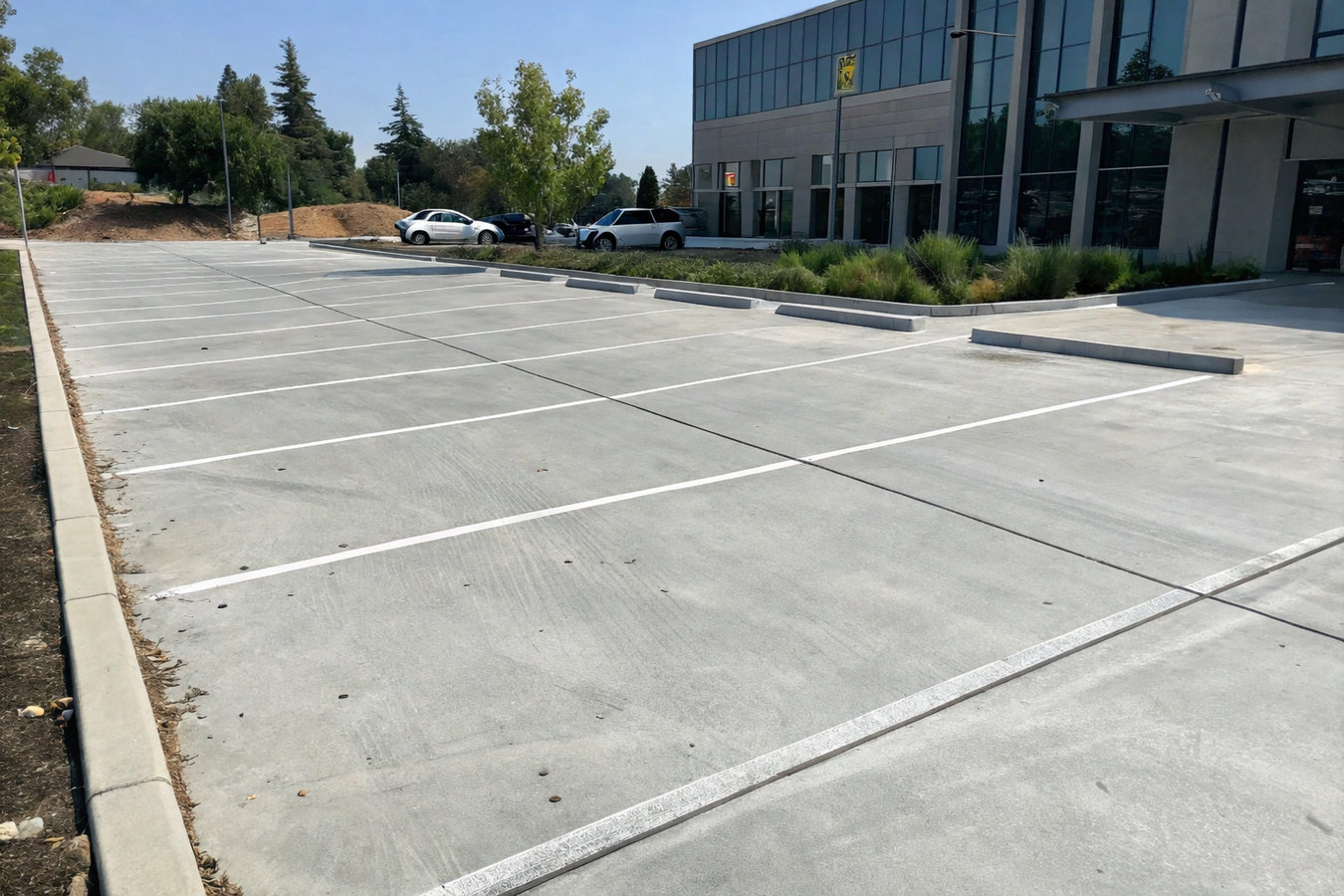
Waterbury has a large stock of multi-family homes and commercial properties where shared parking areas have been patched repeatedly until patching is no longer cost-effective. Our concrete parking lot building work in Waterbury addresses the full scope - demolishing deteriorated surfaces, grading for proper drainage on the city's sloped lots, and pouring a slab with the thickness and joint placement to handle vehicle loads through Connecticut winters without the annual cracking cycle that older asphalt surfaces produce.
Waterbury is built along the sides of the Naugatuck River valley, and hillside neighborhoods like Bunker Hill and the North End have many properties where slopes push soil and water toward the house without a wall to stop them. Retaining walls on Waterbury lots need drainage aggregate and weep holes behind them - without that, water pressure builds against the wall face each spring and eventually causes tilting or cracking regardless of how well the wall was built.
Many Waterbury driveways were originally poured on improperly graded hillside lots, which means water runs under the slab rather than away from it, and freeze-thaw damage starts from below. Replacing a driveway on a sloped Waterbury lot requires grading the base to direct drainage away from the foundation before the new concrete is poured - skipping that step produces the same failure within a few years of the replacement.
Front entry steps on Waterbury's older mill-era homes frequently settle and crack as the original footings shift under decades of frost pressure. Steps that have pulled away from the foundation at the bottom riser, or that rock when you step on them, are a safety issue and a water entry point for the foundation below. New steps poured on properly sized footings with the right riser-to-tread ratio stay stable through Waterbury winters without that annual widening gap.
Waterbury homeowners in neighborhoods like Town Plot and the South End who want a functional outdoor space often have small backyards on sloped lots where drainage is the first problem to solve before any patio can be poured. A patio built with the proper pitch to direct rainwater away from the house - and a compacted gravel base that allows water to move through rather than pooling beneath the slab - stays level and usable through years of Connecticut freeze-thaw cycling.
Some of Waterbury's older homes sit on original stone or early concrete foundations that have deteriorated beyond repair, and replacement with a modern slab foundation is the practical solution. Slab foundations on Waterbury properties require proper grading and vapor barrier installation given the valley location and the spring snowmelt and rain that pushes water toward foundations across the city each year.
Waterbury grew fast during the late 1800s and early 1900s when the Naugatuck River valley was lined with brass mills, and the neighborhoods built during that era are still the heart of the city today. Census data shows that a large share of Waterbury's housing was built before 1950, with many homes dating to before 1920. These properties have original or early-replacement concrete and masonry work that has now been through over a century of Connecticut winters. Waterbury averages around 45 inches of snow per year, and the freeze-thaw cycle that hits repeatedly each winter - temperatures dropping below freezing overnight and rising above during the day - is the primary force that cracks concrete driveways, heaves walkway sections, and pushes apart the mortar in older masonry. Concrete poured without adequate base depth or joint spacing simply does not survive that cycle intact.
The city's geography adds a second layer of challenge that most concrete contractors from outside the area do not fully account for. Waterbury is built on the sloped sides of the Naugatuck River valley, and many residential lots in neighborhoods like Bunker Hill, Town Plot, and the North End sit on terrain that is not flat. Water runs downhill, and if it runs toward the house rather than away from it, it works under concrete slabs, saturates the soil against the foundation, and accelerates damage from below. Spring snowmelt combined with the city's valley location creates the basement water intrusion problems that are among the most common homeowner complaints in Waterbury each year, as the Connecticut DEEP recognizes in its guidance on stormwater and flood management. Concrete work that does not address drainage as part of the base preparation will fail on these lots for the same reason the original work failed.
Our crew works throughout Waterbury regularly, and we understand the conditions that affect concrete work across this city's distinct neighborhoods. Waterbury's building stock is among the oldest in Connecticut - the two-family and three-family homes that fill neighborhoods like the Bunker Hill area and the South End were built for mill workers in the early 1900s and share many of the same aging-material challenges: original foundations, layers of later renovation over older construction, and exterior work that has been patched rather than properly replaced for decades. Jobs on these properties often require more careful base assessment than a newer home would, because what looks like a simple driveway replacement can involve uncovering old fill or unstable sub-base material once demolition begins.
Waterbury's layout runs along Route 8 and I-84 through the valley, with residential neighborhoods climbing the hills on both sides. Major landmarks the crew uses for orientation include Holy Land USA on Pine Hill to the east, the Waterbury Green at the city center, and the Chase Parkway corridor that runs through some of the city's more stable residential areas. We know the difference between what a Town Plot job looks like versus a Bunker Hill job, and that local familiarity affects how we approach the estimate and the prep.
We also serve homeowners in nearby Meriden, CT and Bristol, CT, which sit to the east and southeast of Waterbury and share many of the same older building stock and valley terrain characteristics.
Call or submit a contact form and we will reply within one business day to arrange a site visit. You do not need to prepare anything - just tell us what you are trying to fix or build, and we take it from there.
We visit the property and assess the existing conditions, including slope, drainage, soil stability, and access. For Waterbury's hillside lots, we pay particular attention to how water moves across the site, because grading decisions made at this stage determine whether the finished work holds up. The written estimate covers everything - demo, prep, pour, and cleanup - so there are no cost surprises once work begins.
On project day, we demolish and remove old concrete, grade the base for proper drainage, compact the sub-base, form the slab, and pour and finish to the agreed specification. Most Waterbury residential jobs take two to four days from demo through final finishing. We pull any required city permits before work begins and schedule the city inspection when the job is complete.
Concrete needs a minimum of seven days before normal use. We walk through the completed work with you before we leave, explain the curing timeline, and let you know what to expect as the surface reaches full strength over the following weeks.
We serve homeowners throughout Waterbury, from Town Plot and Bunker Hill to the South End and the North End. Call or submit a form and we will reply within one business day - no pressure, no commitment.
Waterbury is Connecticut's fifth-largest city, with about 114,000 residents spread across roughly 29 square miles of valley and hillside terrain. The city built its identity as the "Brass City" during the industrial boom of the late 1800s and early 1900s, when its mills along the Naugatuck River produced brass hardware and fittings that were shipped across the country. The neighborhoods that grew around those mills are still standing today - dense, working-class streets of two-family and three-family homes that reflect the construction styles of the early 20th century. Waterbury's history is visible in the architecture across the city, from the Victorian-era homes in Bunker Hill to the more modest colonials and cape cods that fill Town Plot.
The city sits at the junction of I-84 and Route 8, making it a natural crossroads for central Connecticut. Each of Waterbury's neighborhoods has its own character: Town Plot is one of the more stable owner-occupied residential areas, with mid-20th-century single-family homes and well-kept yards. The Bunker Hill neighborhood has older Victorian-era housing on steeper lots. The South End and Brooklyn neighborhoods are denser and more urban, with closer-set multi-family buildings. We serve homeowners across all of these areas, and we also work in nearby Bristol, CT and New Britain, CT, which are the neighboring cities to the east.
Get a durable, long-lasting driveway built to handle Connecticut winters.
Learn MoreTransform your backyard with a beautiful, custom concrete patio.
Learn MoreSafe, smooth sidewalks installed to code for homes and businesses.
Learn MoreStrong retaining walls that control erosion and define your landscape.
Learn MoreProfessional floor installation for residential and commercial spaces.
Learn MoreCustom concrete steps built for lasting curb appeal and safety.
Learn MoreCommercial parking lots built for durability and high traffic.
Learn MoreWe visit Waterbury properties at no cost and give you a written estimate before any work is scheduled. Call now or submit a form and we will get back to you within one business day.